Issue #06 • Week of October 11, 2026
The Pursuit of Probability
The Future Has a Price
The midterms are three weeks away. The World Series is around the corner. And prediction markets are giving people a new way to follow both.
This week, Kalshi's American Power Index captured a major shift in expectations for who will control Washington. New tools are making election markets more transparent, and a new partnership is helping protect athletes from online abuse.
Meanwhile, Kalshi made another appearance in October baseball, right where millions of Americans were already watching.
The common thread? Prediction markets are becoming part of how people follow the news, watch sports, and make sense of what comes next.
Freedom to Forecast
One country. Fifty states. One big question.
The fight over who gets to regulate prediction markets continues.
The NFL and American Gaming Association are backing New Jersey's request for Supreme Court review of sports-related prediction markets. In Nevada, the legal fight over state authority continues. And an Illinois federal court recently granted Kalshi preliminary protection against certain state enforcement actions.
These are different cases, but they raise the same fundamental question: should Americans have access to one federally regulated national marketplace, or should access depend on which state they call home?
Join the movement. Join Freedom to Forecast.
Power, Priced
At the start of the year, Republicans held a commanding lead in the index. Today, the balance has shifted toward Democrats.
KPOW combines market expectations for control of the House, Senate, and presidency with the current distribution of political power. Think of it as a live scoreboard for Washington, except it can move before a single vote is counted.
Polls ask people who they support. KPOW measures what the market expects the balance of power to look like.
There are still three weeks until Election Day.
Washington's future is already being repriced.
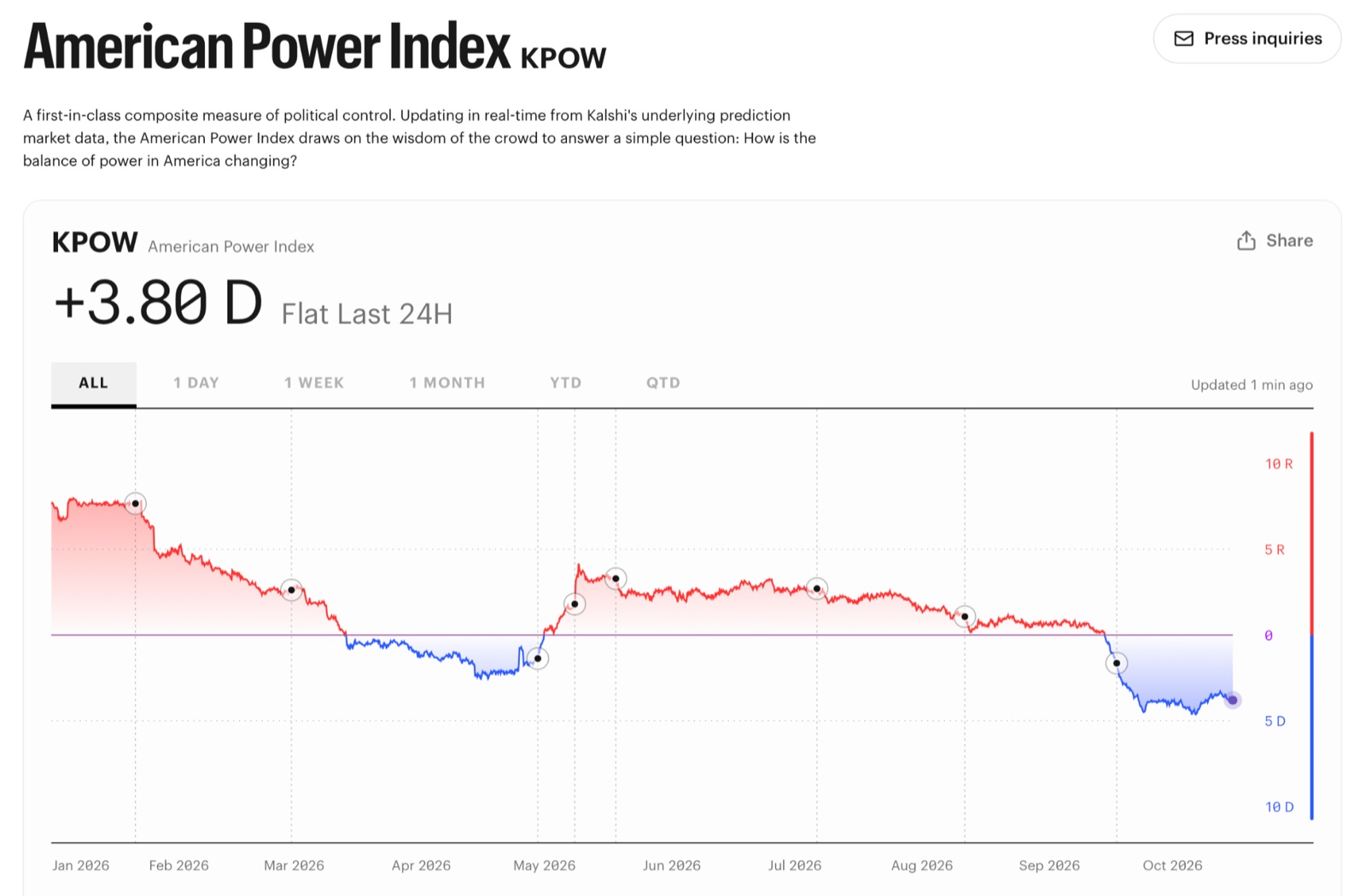 Explore the American Power Index
New at Kalshi
More transparency. Less guesswork.
With the midterms approaching, Kalshi introduced new tools to help people make better sense of election markets.
Historical accuracy scores, low-volume indicators, and more visible trading activity give users additional context behind the numbers they see.
Because probability is only part of the story. Understanding what's behind it matters, too.
And as prediction markets become a regular part of election coverage, that distinction becomes more important.
Explore the new featuresSports can get emotional. The internet doesn't always handle that particularly well.
Kalshi announced a partnership with Signify Group to help identify online harassment and threats directed at athletes and coaches.
The technology will monitor abuse across major sports leagues, including the NFL, NBA, MLB, NHL, and ATP Tour. Verified abuse can lead to enforcement action against responsible Kalshi accounts.
Sports prediction markets are growing up. The protections around them should grow with them.
Read the announcement
Kalshi in Culture
October baseball has a new spectator.
There's nothing quite like postseason baseball.
Every pitch matters. Every manager's decision gets second-guessed. And somewhere, millions of people are convincing themselves they know exactly what's going to happen next.
Prediction markets fit naturally into that conversation.
With the Dodgers and Brewers fighting for a place in the World Series, fans can follow how expectations shift from one game to the next.
Baseball has always been obsessed with numbers.
Now it has a new one to argue about.
Explore baseball markets
Seen in the Wild
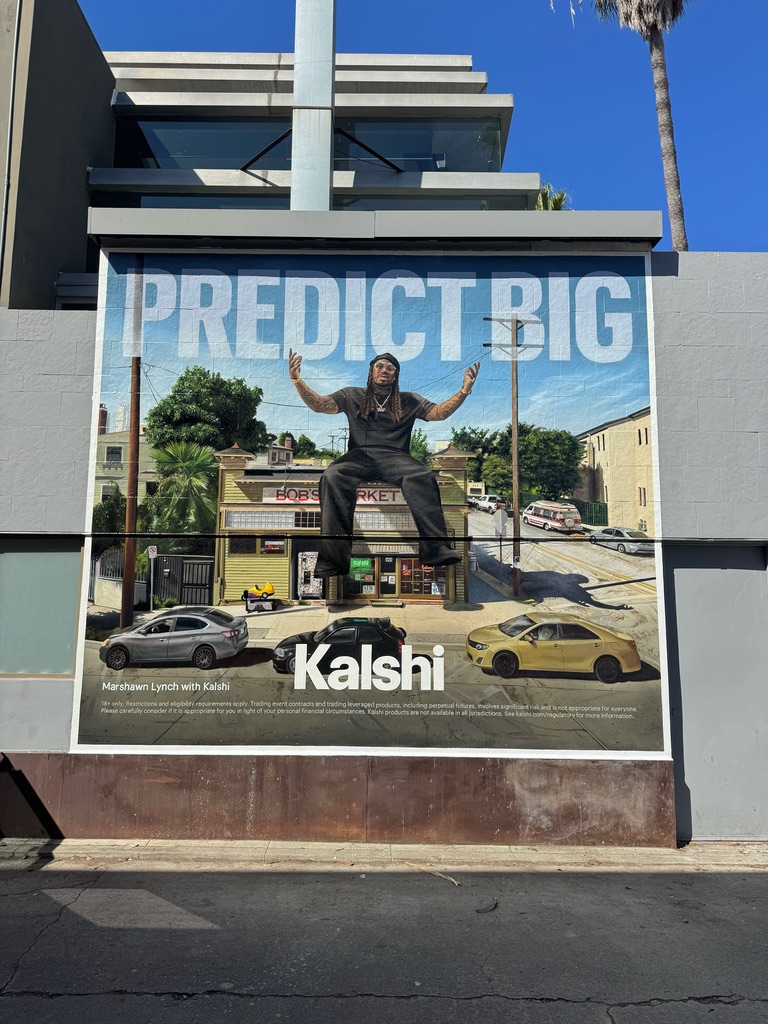
One More Thing
Even Rotten Tomatoes has a futures market now.
The new Street Fighter movie arrives Friday, and the internet has already found something to fight about.
Not the cast. Not the trailer. Not whether another video game adaptation can finally get it right.
The Rotten Tomatoes score.
Kalshi traders were forecasting a 43% critics score as of October 13, putting a number on the reviews before they even arrived.
The movie is about people fighting. Naturally, the internet got there first.
Explore culture marketsOutcomes discussed may not be not representative of overall customer performance or success. Past results are not necessarily indicative of future performance